What is Bias In Artificial Neural Network?
- Authors
- Name
- Amit Shekhar
- Published on


Bias in an Artificial Neural Network is the constant c in the model y = mx + c. Without bias, the line must pass through the origin. With bias, the model can shift the line and fit the data better.
In this blog, we will learn what is Bias In Artificial Neural Network.
I am Amit Shekhar, Founder @ Outcome School, I have taught and mentored many developers, and their efforts landed them high-paying tech jobs, helped many tech companies in solving their unique problems, and created many open-source libraries being used by top companies. I am passionate about sharing knowledge through open-source, blogs, and videos.
I teach AI and Machine Learning at Outcome School.
Let's get started.
Understanding bias in simple words
Bias is one of the important terminologies in machine learning. Often we add bias while creating any model in the artificial neural network.
So, let's understand what is this mysterious bias.
In the neural network, we are given the input(x) and for that input, we need to predict the output(y). Here, we create a model(mx + c), which predicts the output.
While training, the model itself finds the appropriate value of the constants mand c.
Let's say we have the model as y = mx instead of the y = mx + c.

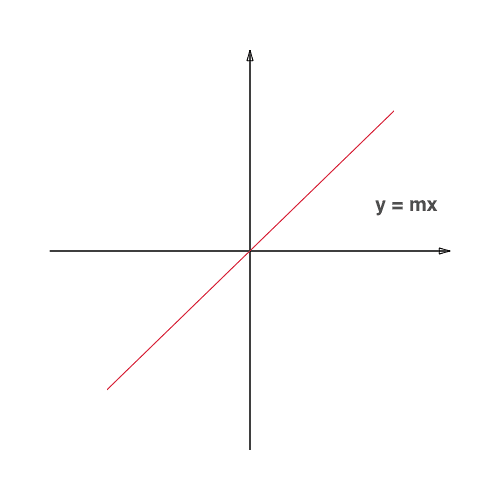
Here, the model is having constraint to train itself and find a line which passes only through the origin.
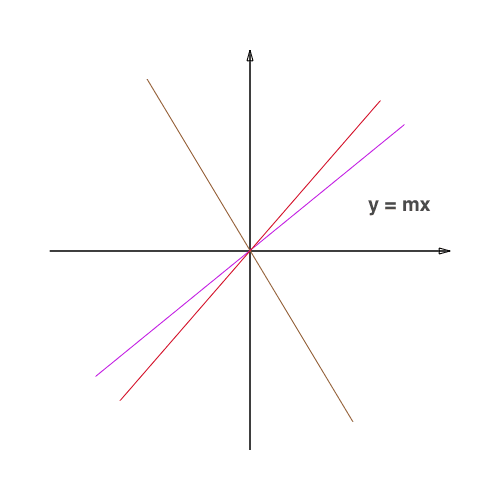
Many times for the given data, it is impossible for the algorithm to fit the model so that it passes through the origin.
A quick note for you
No matter which tech domain you work in, get familiar with these topics:
- LLM
- RAG
- MCP
- Agent
- Fine-tuning
- Quantization
We put it all together in one video:
AI Engineering Explained: LLM, RAG, MCP, Agent, Fine-Tuning, and Quantization
No need to stop reading - bookmark it and watch later when you get time. Future you will thank you.
Now, let's get back to the topic.
Who doesn't need the freedom to perform well?
Let's give some freedom to the algorithm by changing the model as mx + c instead of mx, so that the model can find a line which fits the given data.
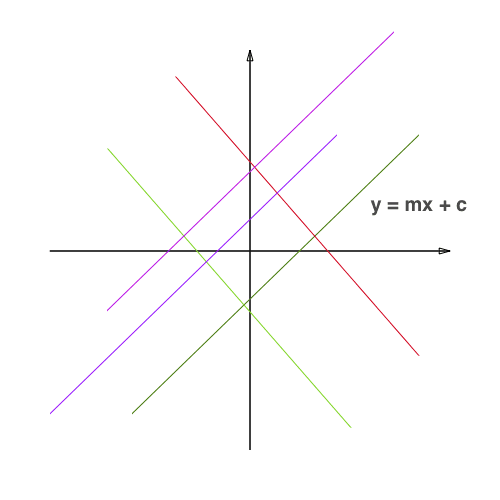
Now, it is having the full freedom to train itself and find a model that fits the best for the given data.
Here, the constant c is the bias.
Bias is a constant which helps the model in a way that it can fit best for the given data.
In other words, Bias is a constant which gives freedom to perform best. This is Bias.
Stay updated: Subscribe to our newsletter to get our latest AI and Machine Learning blogs straight to your inbox.
Frequently Asked Questions
What happens if a neural network model has no bias?
Without bias, the model is y = mx, so it is forced to find a line that passes only through the origin. Many times, for the given data, it is impossible to fit such a line. Adding the bias gives the model the freedom to fit the data well.
Who decides the value of the bias in a neural network?
The model itself decides it. While training, the model finds the appropriate values of the constants m and c on its own. Here, the constant c is the bias.
Why is bias described as giving freedom to the model?
Bias removes the constraint that the line must pass through the origin. With the model mx + c instead of mx, the model has full freedom to train itself and find the line that fits best for the given data. So, bias is a constant that gives the model freedom to perform best.
That's it for now.
Thanks
Amit Shekhar
Founder @ Outcome School
You can connect with me on:
Follow Outcome School on: