Machine Learning Blogs

How do you become a Forward Deployed Engineer?
Forward Deployed Engineer is a role we reach by first becoming an engineer who can ship with an AI coding agent, then learning AI engineering, integrations, and deployment inside a customer's environment. We prove it with one project that adds an AI feature to a system we did not write.
How does K-Means Clustering work?
K-Means Clustering is a Machine Learning method that automatically splits data into K groups, where each item belongs to the group whose center is closest to it. It finds these groups on its own, without anyone telling it the correct answers.
What is a Reward Model and How Is It Trained?
A Reward Model is a model that reads a prompt and an answer, and gives back one number that tells how good that answer is as per human preference. It is trained on pairs of answers where humans picked the better one.
How does Self-Supervised Learning work?
Self-Supervised Learning is a way of teaching a machine where the data creates its own labels, so the machine learns from raw data with no human labeling.
What is Actor-Critic in Reinforcement Learning? The Advantage Function Explained
Actor-Critic is a way of training an AI agent where one part, the Actor, picks the actions, and another part, the Critic, judges how good each action was right after it happens. This judgment is called the advantage, and it tells the Actor how much better or worse an action was than usual.
How do an AI Engineer and a Software Engineer differ?
An AI Engineer and a Software Engineer both build software with a coding agent, but a Software Engineer builds systems that give the same output every time, while an AI Engineer builds products on top of AI models whose output can change every time.
What is an AI Agent Engineer?
An AI Agent Engineer is an AI Engineer who specializes in building AI agents, which are systems built around an LLM that decide what to do next, use tools, and keep working step by step until a goal is reached.
How does flow matching train a generative model?
Flow matching trains a generative model by teaching it the direction and speed to move from a random noise point toward a real data point, like a photo. During training, it draws a straight line between a noise point and a real data point and asks the model to predict the movement along that line.
What is Policy Gradient? The REINFORCE Algorithm Explained
Policy Gradient is a way to train an AI agent by directly making the actions that led to good results more likely, and the actions that led to bad results less likely. REINFORCE is the simplest algorithm that does this.
What is a Value Function? Q-Learning Explained Step by Step
A Value Function gives a number that tells an agent how much total reward it can expect from a situation, and Q-Learning is a method that learns these numbers for every situation and action by trial and error.
Convolutional Neural Networks
Convolutional Neural Networks (CNNs) are neural networks built to understand images. They slide small pattern detectors over a picture to find edges, shapes, and objects, step by step.
What is Exploration vs Exploitation in Reinforcement Learning?
Exploration vs Exploitation in Reinforcement Learning is the choice an agent faces at every step: use the action it already knows works well (exploitation), or try a different action to learn something new that can work even better (exploration).
How does Pretraining work?
Pretraining is the first and biggest stage of building an LLM, where the model reads a huge amount of text and learns to predict the next word again and again. By doing this billions of times, it learns language, facts, and patterns of reasoning.
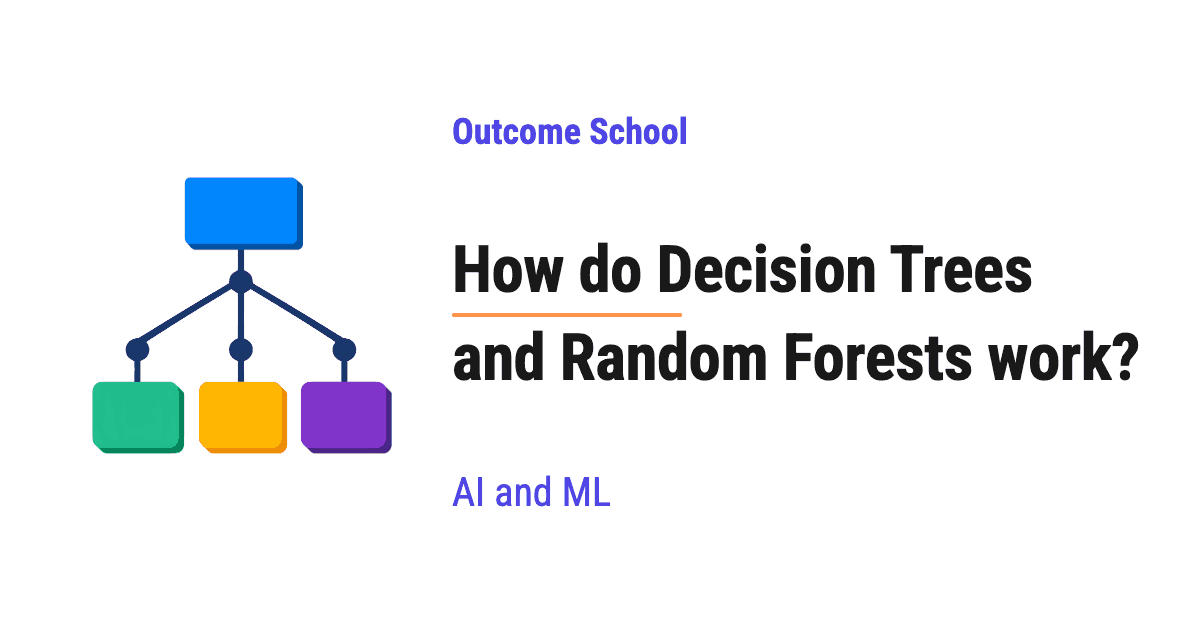
How do Decision Trees and Random Forests work?
Decision Trees and Random Forests are Machine Learning models that make a decision by asking a series of simple yes-or-no questions about the data. A Decision Tree is one such flowchart of questions, and a Random Forest is a team of many slightly different Decision Trees that vote together to give a more reliable answer.
What is a Markov Decision Process (MDP)?
A Markov Decision Process (MDP) is a way to describe a problem where an agent makes decisions step by step, each decision changes the situation, and each step brings a reward. It is the standard way to write down a reinforcement learning problem.
How do a Generative AI Engineer and an AI Engineer differ?
A Generative AI Engineer and an AI Engineer do the same job in practice, which is building products on top of existing AI models. The Generative AI Engineer title stresses models that generate text, image, audio, and video, while the AI Engineer title is the broader umbrella that also covers classification, recommendation, and vision features built on existing models.
What are Log Probabilities (Logprobs) in LLMs?
Log Probabilities (Logprobs) in LLMs are the log of the probability (the chance) that the model gives to each token it can write next. They tell us how sure the LLM was about every token it picked.
How does the Context Window work?
A Context Window is the total amount of text, measured in tokens, that a Large Language Model can read and remember at one time. It is the model's short-term memory.
How does a Data Scientist transition to AI Engineer?
A Data Scientist transitions to AI Engineer by keeping the Python, statistics, and evaluation skills they already have, and adding software engineering, APIs, deployment, agents, and the habit of building with an AI coding agent.
What is KL Divergence? The Math Explained Step by Step
KL Divergence is a number that tells us how different one probability distribution is from another. The bigger the number, the more different they are, and it is zero only when both are exactly the same.
How does an Android Developer transition to AI Engineer?
An Android Developer transitions to AI Engineer by keeping the Kotlin, async, networking, and shipping skills they already have, and adding Python, LLM APIs, RAG, agents, evaluation, and backend deployment on top of them, one project at a time with a coding agent.
How does the Bias-Variance Tradeoff work?
The Bias-Variance Tradeoff is the balance between a model that is too simple to learn the real pattern (high bias) and a model that is so sensitive that it learns the random accidents in its training data (high variance). A good model sits in the middle, where the total error on new data is the lowest.
How does a Software Engineer transition to AI Engineer?
A Software Engineer transitions to AI Engineer by reusing the engineering skills that already exist, learning how LLMs, prompts, RAG, agents, and evaluation work, and building a few AI products with a coding agent to prove it.
How do you become an AI Engineer?
To become an AI Engineer, we learn to build products on top of existing AI models using APIs, RAG, agents, evaluation, and deployment. We prove those skills with a few working projects that we build with a coding agent and can explain end to end.
How does Data Augmentation work?
Data Augmentation is a technique where we create new training examples from our existing data by making small changes to it, like flipping an image or rewording text.
What are Optimizers in Deep Learning? SGD, Momentum, RMSProp, and Adam Explained
An optimizer is the part of deep learning training that decides how to change the weights of a neural network after every training step, so that the network makes fewer mistakes. SGD, Momentum, RMSProp, and Adam are four popular optimizers, and each one improves on the one before it.
Why Do We Initialize Weights Randomly in Neural Networks?
We initialize weights randomly in neural networks so that every neuron starts a little different from the others and can learn something different. If all the weights start with the same value, all the neurons in a layer learn the exact same thing, and the network wastes most of its neurons.
What is an AI Engineer and what do they actually do?
An AI Engineer is a software engineer who builds products such as a chat assistant, a document search tool, or an AI agent on top of existing AI models, instead of training new models from scratch.
What are Epoch, Batch, Batch Size, and Iteration in Machine Learning?
Epoch, Batch, Batch Size, and Iteration are the four words that describe how a machine learning model goes through its training data. A batch is a small group of samples, the batch size is how many samples are in that group, an iteration is one learning step on one batch, and an epoch is one full pass over the entire training data.
What are Logits in Machine Learning?
Logits are the raw scores that a machine learning model gives to each possible answer before those scores are turned into probabilities. A higher logit means the model is more confident about that answer, but a logit by itself is not a probability.
What is One-hot Encoding in Machine Learning?
One-hot Encoding is a way to turn a category, like a color or a word, into a list of numbers where exactly one position is 1 and all the other positions are 0. The position of the 1 tells the model which category it is.
Why do vanishing and exploding gradients happen?
Vanishing and exploding gradients happen because, during training, the learning signal of a neural network gets multiplied by many numbers, one for each layer, on its way back. If those numbers are mostly smaller than 1, the signal shrinks to almost nothing, and if they are mostly bigger than 1, the signal blows up to a huge value.
How does a Vision-Language Model (VLM) work?
A Vision-Language Model (VLM) is an AI model that can look at an image and read text together, and then answer in text. It works by turning the image into a list of numbers that look like word tokens to a language model, so the language model can read the image just like it reads our question.
How does an LLM work?
An LLM works by predicting the next word. It turns text into tokens and embeddings, passes them through a Transformer using attention, and repeats word by word.
What is the Softmax Function and How Does It Work?
The Softmax Function is a formula that turns a list of raw scores into probabilities, which means every value becomes a number between 0 and 1, and all the values add up to exactly 1.
What are Activation Functions in Neural Networks? Sigmoid, Tanh, ReLU, and Softmax Explained
Activation Functions are math functions that take the number calculated inside a neuron and change it into the final output of that neuron, which allows a neural network to learn curved, complex patterns instead of only straight lines. Sigmoid, Tanh, ReLU, and Softmax are the most common ones.
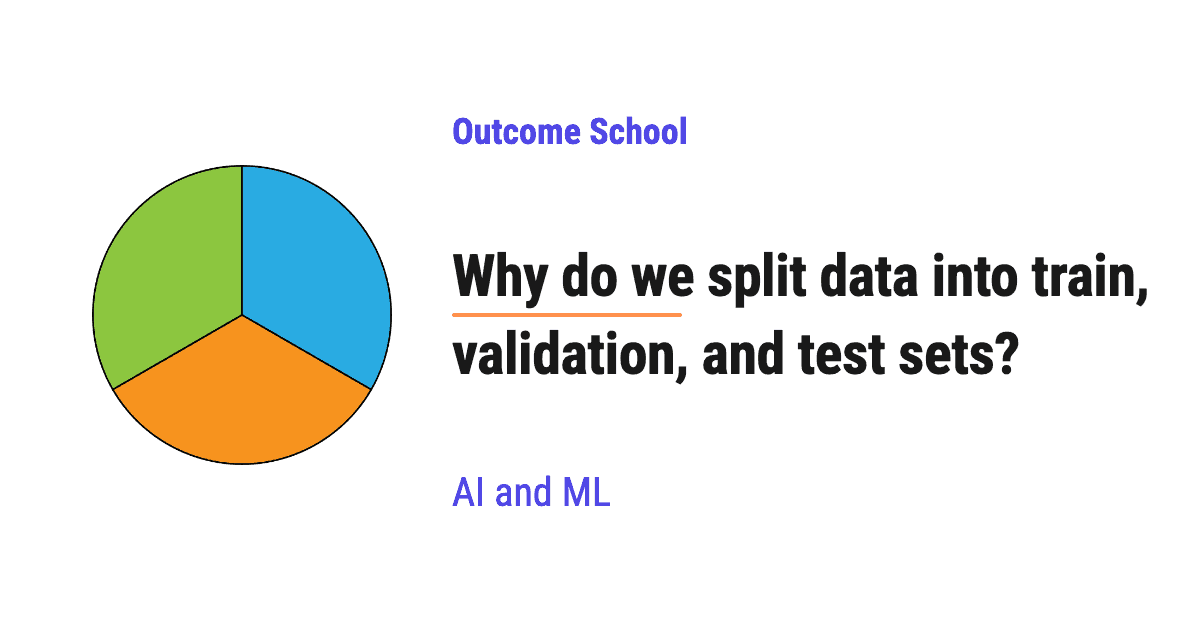
Why do we split data into train, validation, and test sets?
We split data into train, validation, and test sets so that the model learns from one part, gets tuned on a second part, and gets judged fairly on a third part it has never seen before.
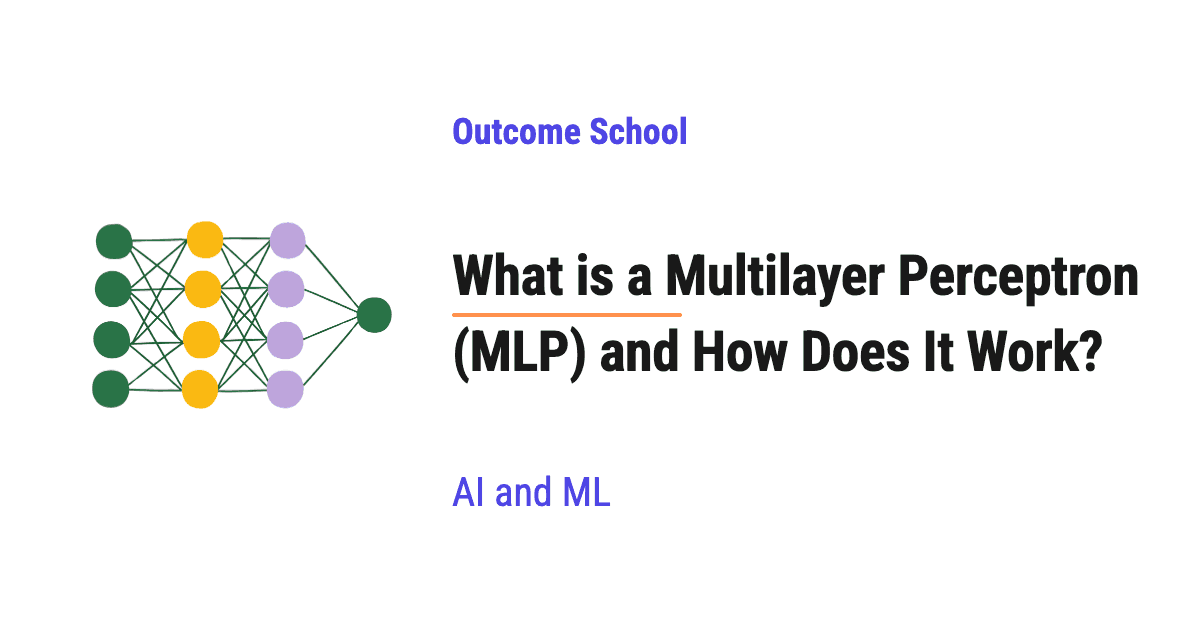
What is a Multilayer Perceptron (MLP) and How Does It Work?
A Multilayer Perceptron (MLP) is a neural network made of layers of simple units called perceptrons, where every unit in one layer is connected to every unit in the next layer. It works by passing numbers forward through these layers, where each unit multiplies, adds, and applies a simple rule, until the last layer gives the answer.
How Does Matrix Multiplication Work in Neural Networks?
Matrix multiplication in neural networks is the operation that takes the input numbers, multiplies them with the weights of all the neurons in a layer, and adds up the results, all in one step. Most of the work a neural network does is this one operation, repeated layer after layer.
What is a Neural Network and How Does It Work?
A Neural Network is a model made of many small units called neurons, arranged in layers, that turn input numbers into a prediction. It learns by adjusting its numbers again and again until its predictions become close to the correct answers.
Tokenization in LLMs
Tokenization in LLMs is the process of breaking text into small pieces called tokens and then converting each token into a number that the model can work with.
How do CUDA Kernels work?
A CUDA Kernel is a function that runs on the GPU and is executed by many threads at the same time, where each thread finds and does its own small part of the work.
The Future of Software Development
The Future of Software Development is a world where AI models become so smart, so fast, and so cheap that we simply tell the computer what we want, and AI agents build, test, and ship it for us. The work of software engineers moves from writing every line of code to building, checking, and improving the systems around these AI models.
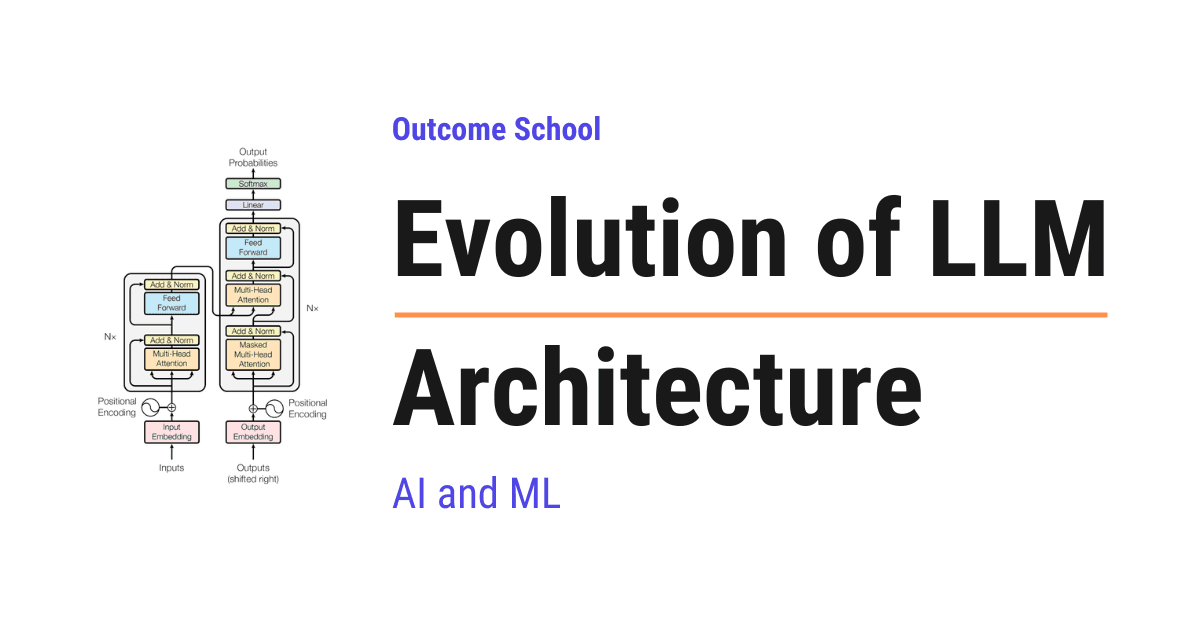
Evolution of LLM Architecture
LLM architecture evolved from RNNs that read one word at a time, to Attention, to the Transformer, to scaling, and to Mixture of Experts (MoE) that we use today.
Jev and System One Models Explained
Jev is a System One Model, a new kind of AI model that does not write text. It only makes fast decisions, with a confidence score, that our software can use directly.
Design a Real-Time Voice AI Agent
A Real-Time Voice AI Agent listens to us, understands, thinks, takes actions, and talks back in a natural voice within a fraction of a second. Let's design one.
What is Recursive Self-Improvement (RSI)?
Recursive Self-Improvement (RSI) is when an AI system improves its own abilities, and then the improved version improves itself further, again and again.
What is KV Cache Compression?
KV Cache Compression is a set of techniques that shrink the memory an LLM uses to remember the conversation, using quantization, token eviction, and more.
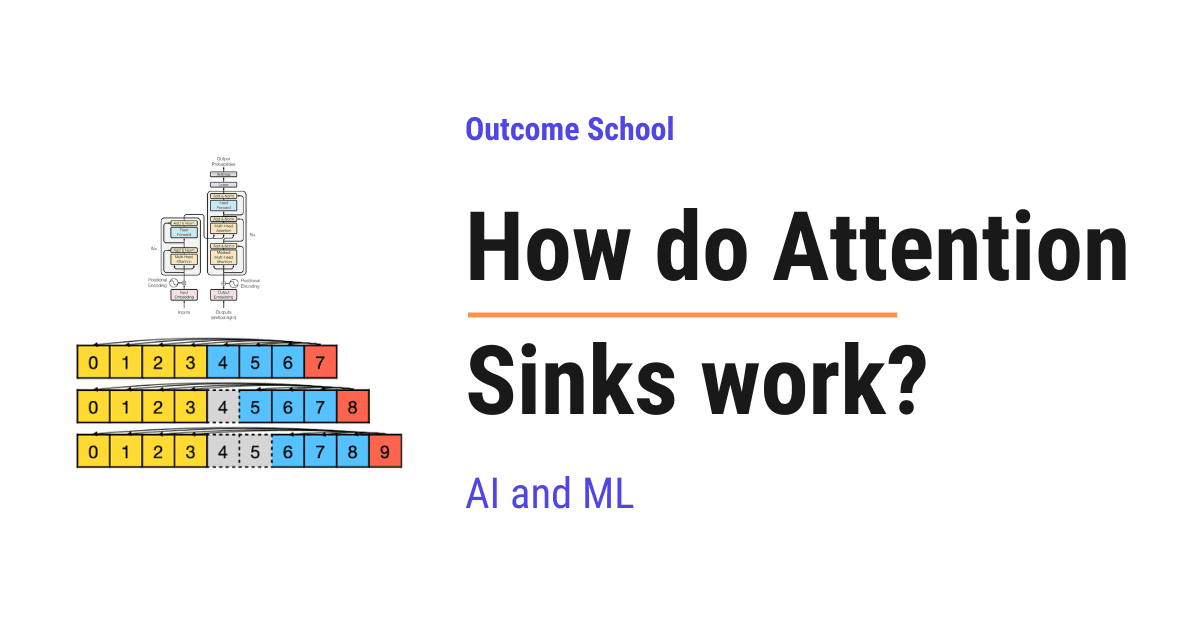
How do Attention Sinks work?
Attention sinks are the first few tokens that get a huge share of attention in an LLM. Keeping them lets StreamingLLM handle very long conversations without breaking.
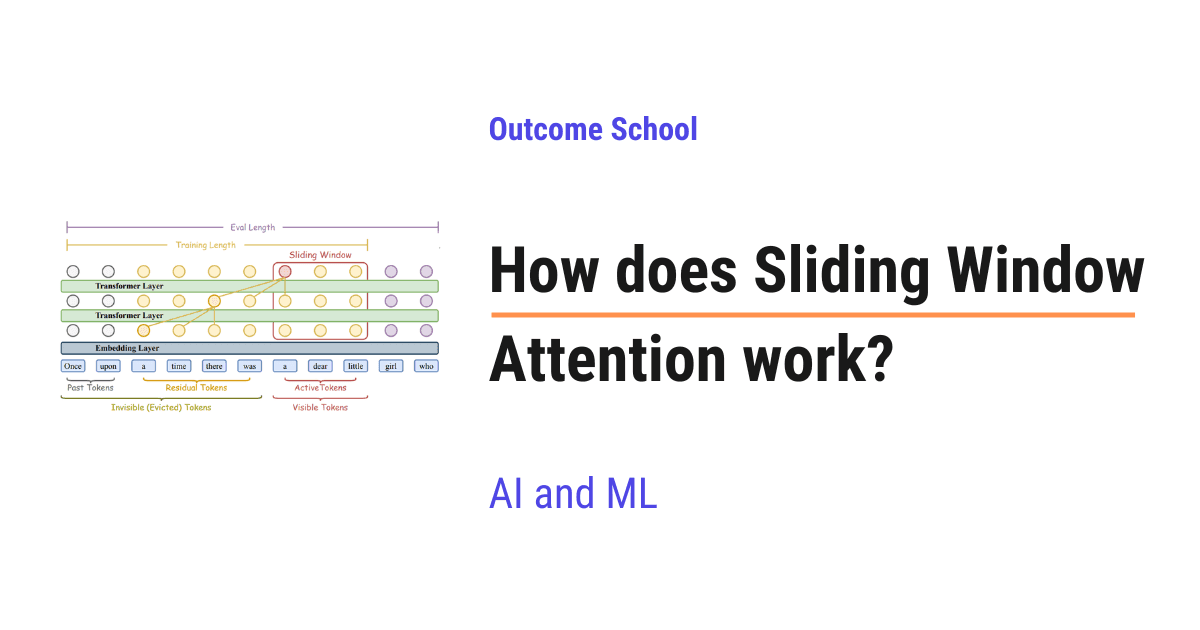
How does Sliding Window Attention work?
In Sliding Window Attention, each word looks only at a fixed number of nearby words instead of all the words, which makes attention fast for long text.
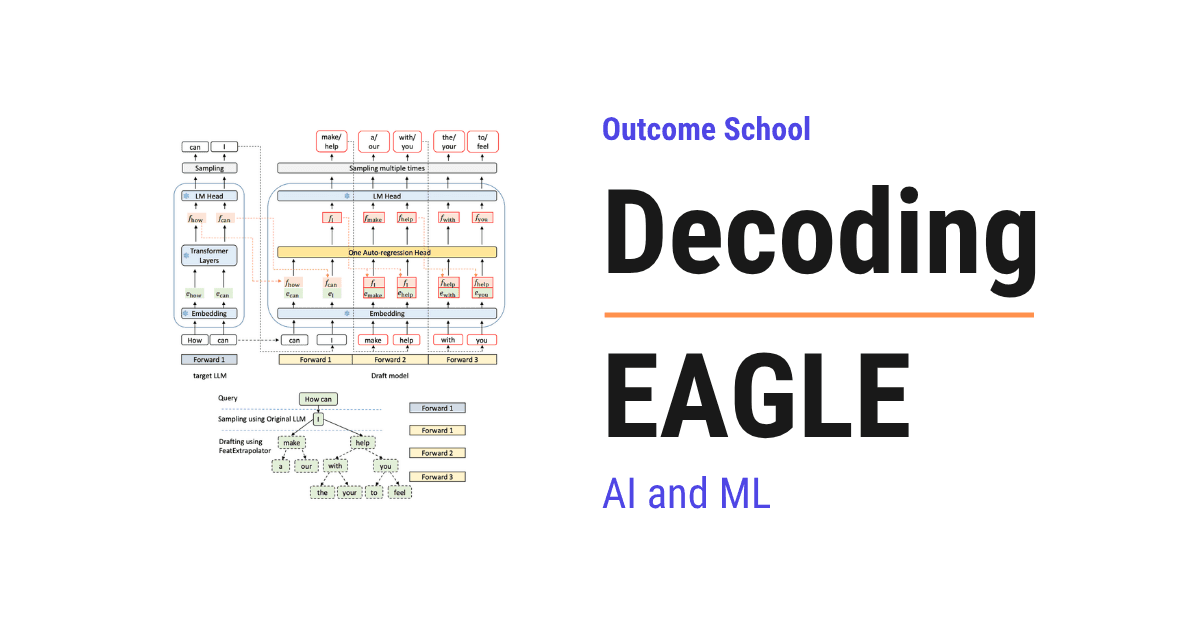
What is EAGLE? Feature-Level Speculative Decoding Explained
EAGLE is a speculative decoding method that makes an LLM generate text faster, without changing its output, by guessing future tokens at the feature level.
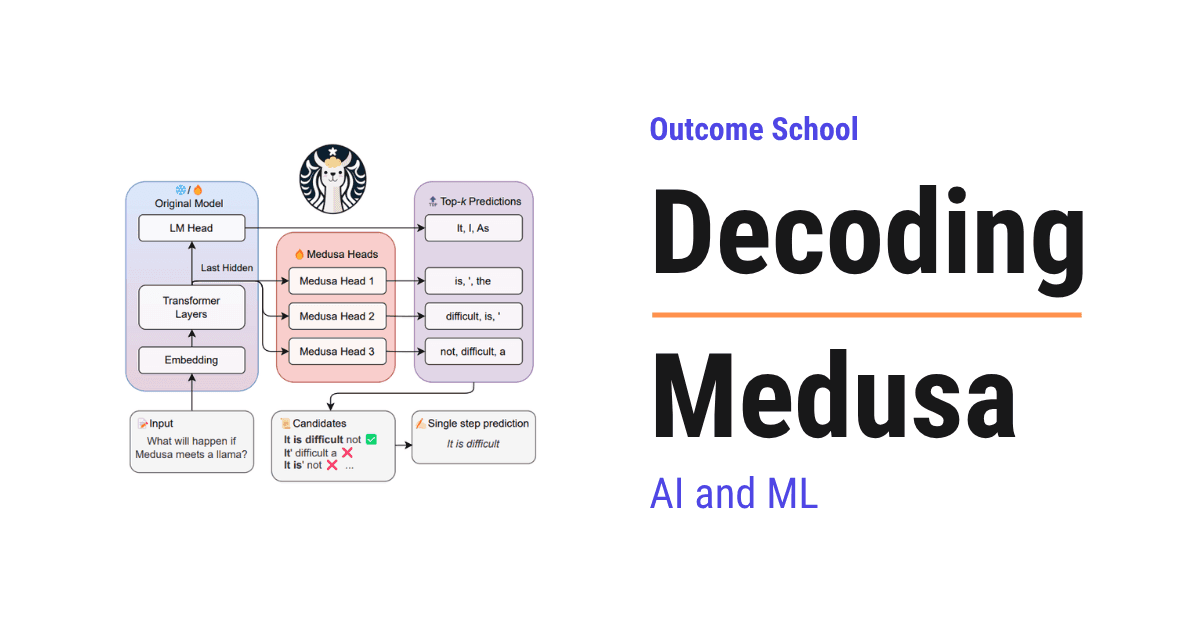
What is Medusa? Multi-Head Speculative Decoding Explained
Medusa makes an LLM generate text 2 to 3 times faster by adding extra heads that guess several future tokens at once, and then checking them together.
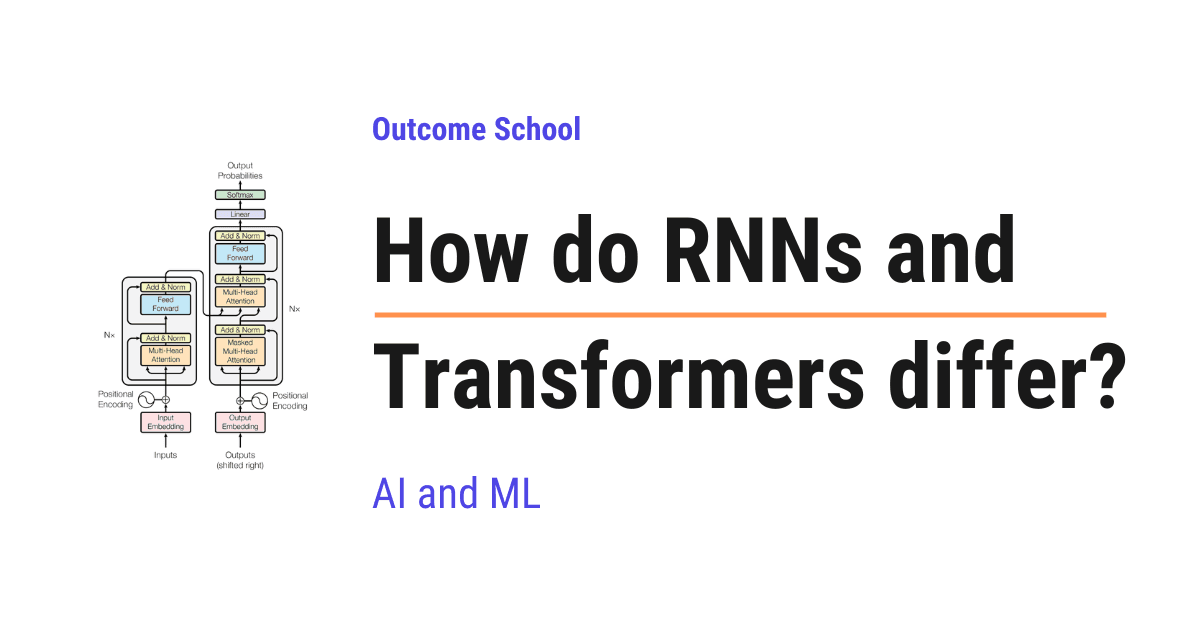
How do RNNs and Transformers differ?
An RNN reads a sentence one word at a time, carrying a memory, whereas a Transformer reads all the words at once and uses attention to connect them directly.
How does Prefix Tuning work?
Prefix Tuning keeps a large language model frozen and trains only a small set of extra numbers, called the prefix, to adapt the model to a new task cheaply.
What is Deep RL from Human Preferences? The Paper That Started RLHF
Deep RL from Human Preferences is the 2017 paper that taught machines what we want by asking humans to pick the better of two clips. It is the origin of RLHF.
What is InstructGPT? How GPT-3 Learned to Follow Instructions
InstructGPT is the model that taught GPT-3 to follow our instructions by learning from human feedback (RLHF). This work led directly to ChatGPT.
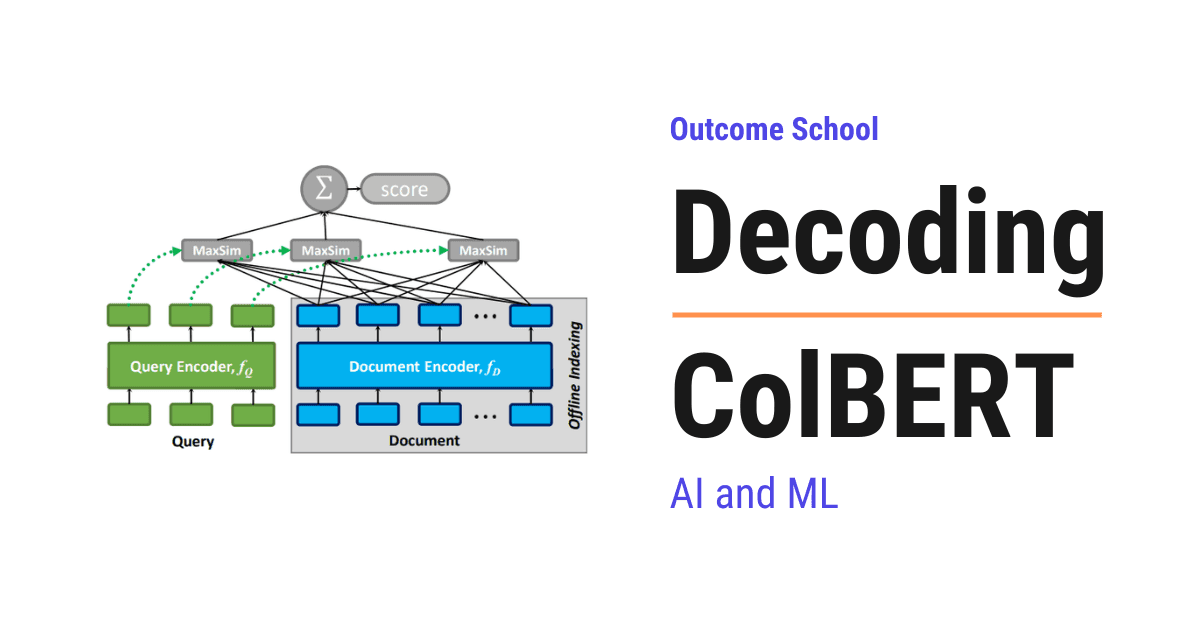
What is ColBERT? Late Interaction Retrieval Explained
ColBERT is a retrieval method that keeps the word-by-word matching of a slow BERT reranker but makes it fast enough to search millions of passages.
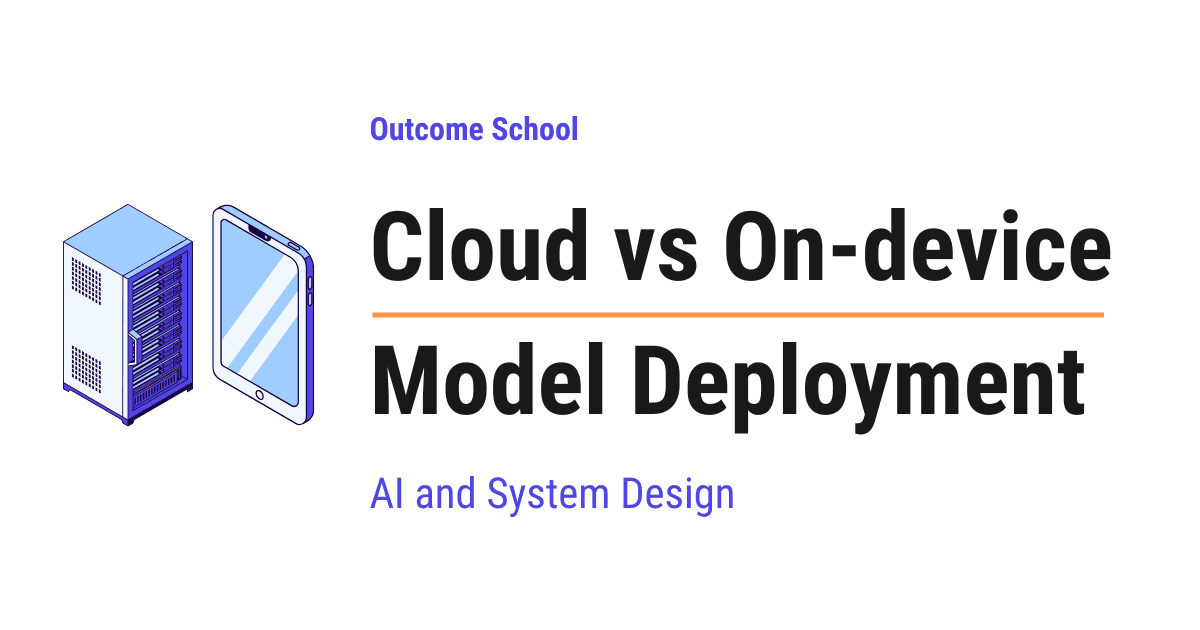
Cloud vs On-device Model Deployment
In Cloud Deployment, the AI model runs on a server and the device asks it over the internet. In On-device Deployment, the model runs inside the device itself.
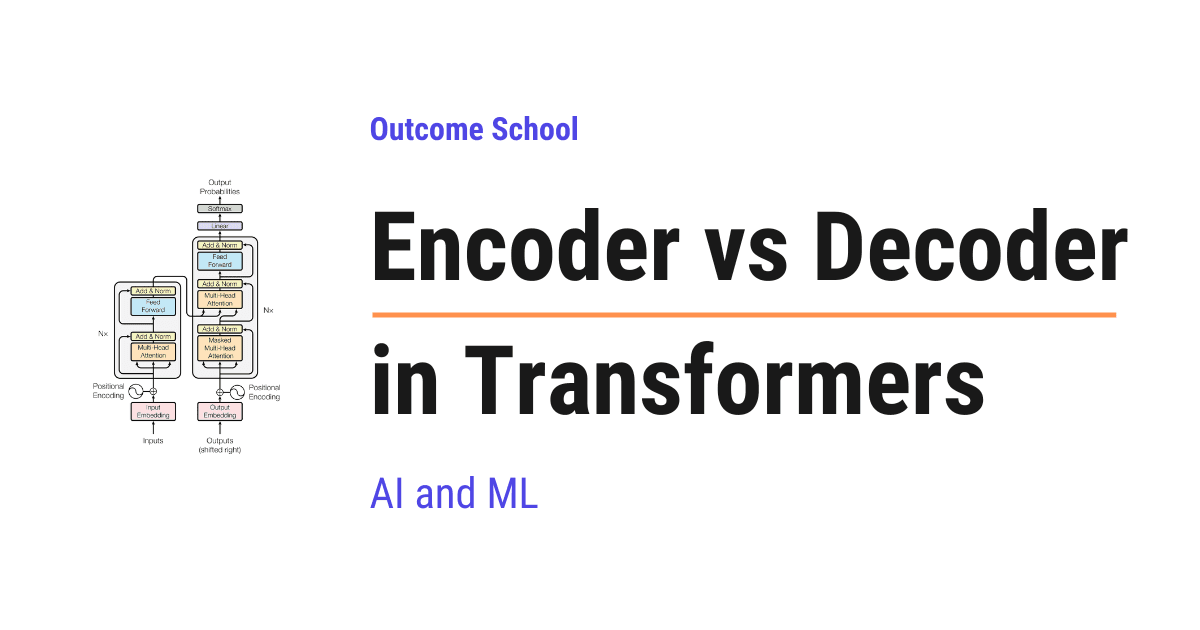
Encoder vs Decoder in Transformers
In Transformers, the Encoder reads the whole input in both directions to understand it, whereas the Decoder generates the output one token at a time.
What is Generative AI?
Generative AI is a type of AI that can create new things, like text, images, audio, video, and code. We will learn how it learns and creates something new.
Precision vs Recall
Precision tells us how many of the items we flagged were actually correct, whereas Recall tells us how many of all the real items we actually caught.
What are Embeddings?
An embedding is a list of numbers that represents the meaning of something, so that things with similar meaning get similar numbers. It powers AI search.
What is MCP (Model Context Protocol)?
MCP (Model Context Protocol) is an open standard that defines one common way for AI applications to connect to outside tools and data. It was created by Anthropic.
How does fine-tuning work?
Fine-tuning is taking a model that is already trained and training it a little more on our own data, so that it becomes good at our specific task.
How does Model Quantization work?
Model Quantization stores and computes a model's numbers at lower precision, so the model takes less memory and runs faster, even on a laptop or a phone.
How does PyTorch work?
PyTorch is an open-source library to build and train machine learning models. It uses tensors, a computation graph, and autograd, and runs fast on the GPU.
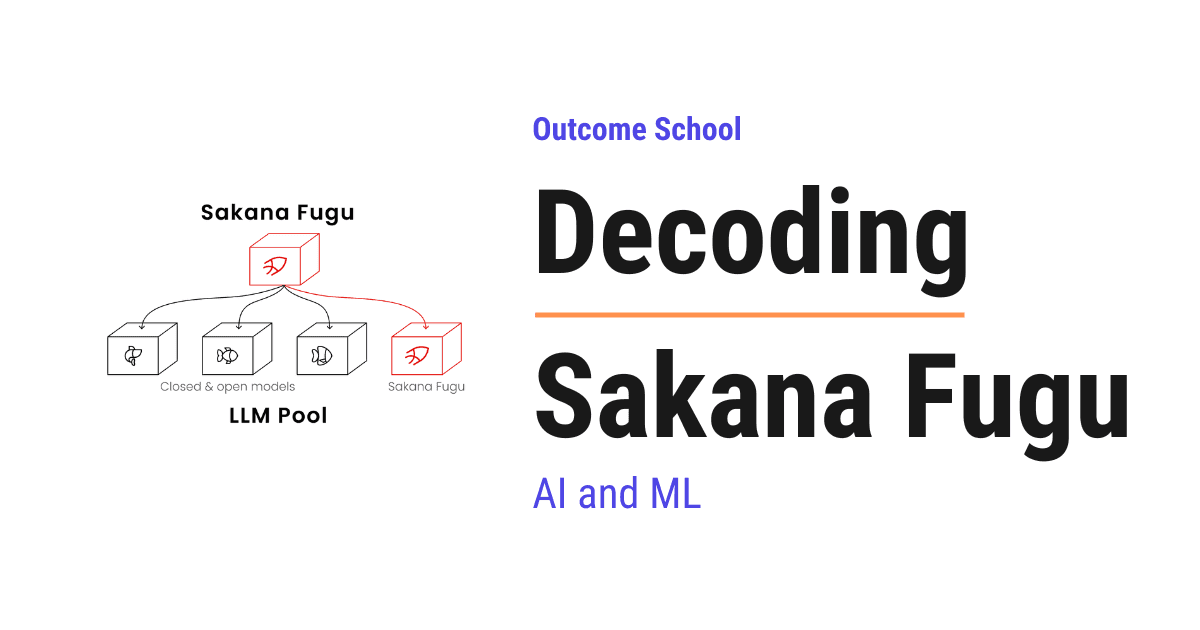
What is Sakana Fugu? The Technical Report Explained
Sakana Fugu is a family of AI models that work like a conductor. They decide which other AI models should work on our question and combine their answers.
How do Diffusion Language Models (DLMs) work?
A Diffusion Language Model writes text by starting from pure gibberish and cleaning it up again and again, instead of writing one word at a time from left to right.
How do World Models work?
A World Model is an AI that learns an internal copy of how an environment behaves, so that it can predict what happens next when an action is taken.
How does Function Calling work in LLMs?
Function Calling lets an LLM use external tools and APIs. The model does not run the function itself. It tells our code which function to call and with what inputs.
How does Knowledge Distillation work?
Knowledge Distillation is a technique where we train a small model to copy the behavior of a big model, so that we can run powerful AI at a low cost.
What is Joint Embedding Predictive Architecture (JEPA) and How Does It Work?
JEPA (Joint Embedding Predictive Architecture) is an idea from Yann LeCun where a model predicts the hidden part of the data in the embedding space, not in pixels.
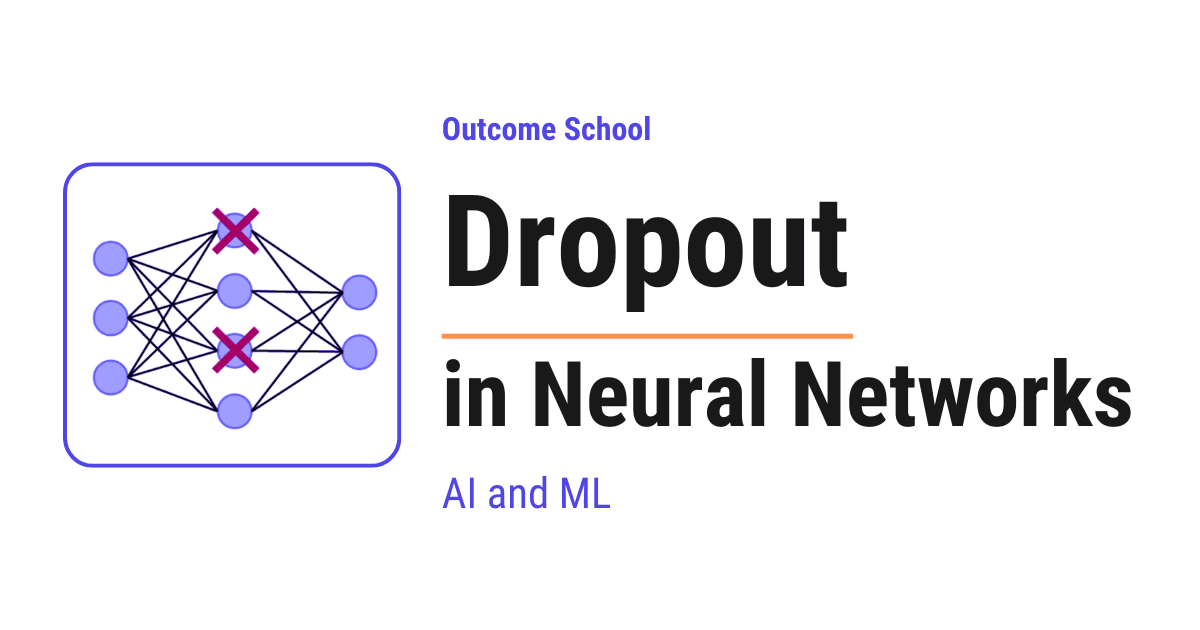
What is Dropout in Neural Networks and How Does It Work?
Dropout randomly switches off some neurons in a neural network during training, so that the network does not depend too much on any single neuron.
What are Generative Adversarial Networks (GANs) and How Do They Work?
A Generative Adversarial Network (GAN) is a system where two neural networks compete, and through this, one learns to create new data that looks real.
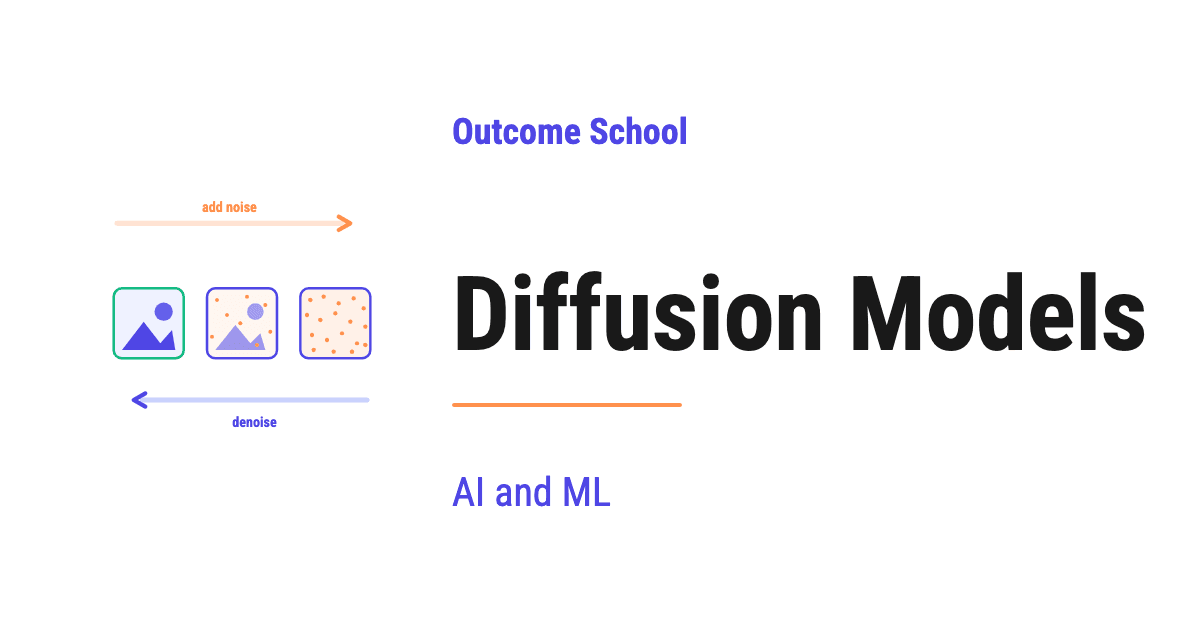
What are Diffusion Models and How Do They Generate Images?
A Diffusion Model creates new images by starting from pure random noise and cleaning it up step by step. This is how DALL-E and Stable Diffusion work.
What are Variational Autoencoders (VAEs) and How Do They Work?
A Variational Autoencoder (VAE) is an Autoencoder that learns a smooth, organized latent space, so that we can pick any point from it to generate new data.
What is Continual Learning in LLMs? Solving Catastrophic Forgetting
Continual Learning is the ability of an LLM to keep learning new information over time, without forgetting what it already learned. We will see how it works.
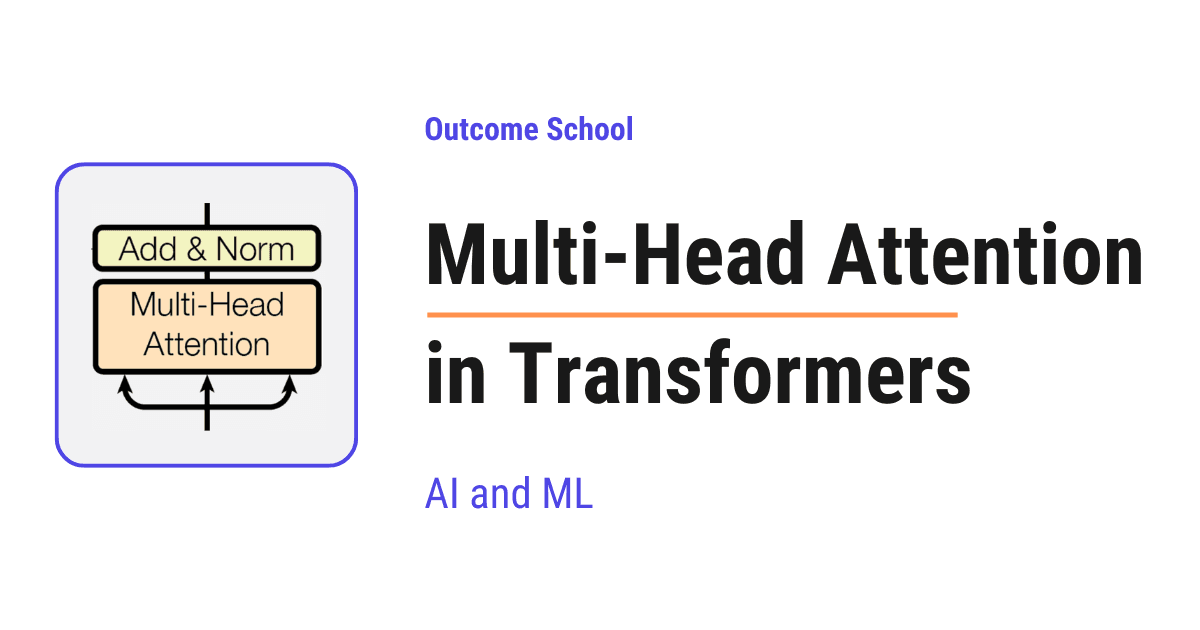
What is Multi-Head Attention in Transformers and How Does It Work?
Multi-Head Attention runs many Self Attention operations in parallel, each focusing on a different aspect of the sentence, and combines their outputs.
What is Cross Attention in Transformers and How Does It Work?
Cross Attention is a mechanism where one sequence looks at a different sequence, using its own Queries against the Keys and Values of the other sequence.
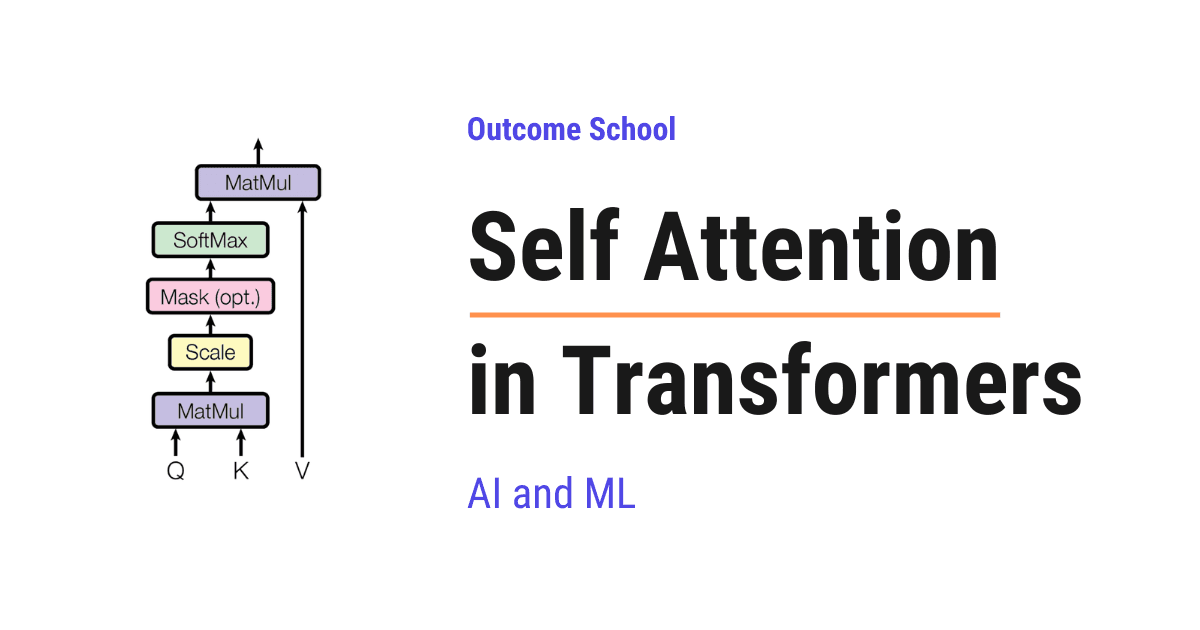
What is Self Attention in Transformers and How Does It Work?
Self Attention lets every word in a sentence look at every other word in the same sentence to understand its meaning. It is the heart of models like BERT and GPT.
What is an AI Agent Loop?
The AI Agent Loop is the code that runs an AI Agent. It asks the LLM what to do, runs that action, feeds back the result, and repeats until the task is done.
What is AI Agent Observability? Traces, Spans, and Metrics Explained
AI Agent Observability means recording every step an AI Agent takes, like each thought and tool call, so that we can see why it behaved the way it did.
How AI Agents Communicate
AI agents communicate by sending messages to each other to share information, ask for help, and work together. We will learn the main ways and protocols.
What are AI SubAgents? Why We Need Them and How They Work
An AI SubAgent is a smaller, specialized agent that works under a main agent to handle one part of a big task, like a team member under a manager.
What is LLM Evaluation? Metrics, Benchmarks, and Methods Explained
LLM Evaluation is the process of measuring how well a Large Language Model performs on the tasks we expect it to do, using metrics, benchmarks, and more.
How to Evaluate AI Agents? Metrics, Methods, and Best Practices
AI Agent Evaluation is the process of measuring how well an AI Agent performs a task, by checking the final result, the steps it took, and the tools it used.
What is AI Orchestration? How It Works and the Common Patterns
AI Orchestration is the process of coordinating many AI parts, like LLMs, tools, data sources, and agents, so that they work together to finish a complex task.
What is LLM as a Judge? How to Use an LLM to Evaluate LLM Outputs
LLM as a Judge is a technique where we use one LLM to evaluate the output of another LLM against our criteria, and give a score or a verdict with a reason.
What is Contrastive Learning? How It Works Step by Step
Contrastive Learning teaches a model by comparing things. It pulls similar things close together and pushes different things far apart. Let's see how it works.
What are Recursive Language Models (RLMs) and How Do They Work?
A Recursive Language Model (RLM) handles very large inputs by letting the model call another language model, or itself, on smaller parts of the input.
What is Group Relative Policy Optimization (GRPO) and How Does It Work?
GRPO is a reinforcement learning algorithm to train LLMs. It generates a group of answers for the same question and teaches the model to prefer the better ones.
What is Direct Preference Optimization (DPO) and How Does It Work?
Direct Preference Optimization (DPO) trains an LLM directly on human preference data, without a separate reward model and without reinforcement learning.
What is Proximal Policy Optimization (PPO) and How Does It Work?
Proximal Policy Optimization (PPO) is a reinforcement learning algorithm that improves the policy in small, safe steps. It is used to train LLMs with RLHF.
Batch Normalization vs Layer Normalization
Batch Normalization normalizes each feature across all examples in a batch, while Layer Normalization normalizes all features within each single example.
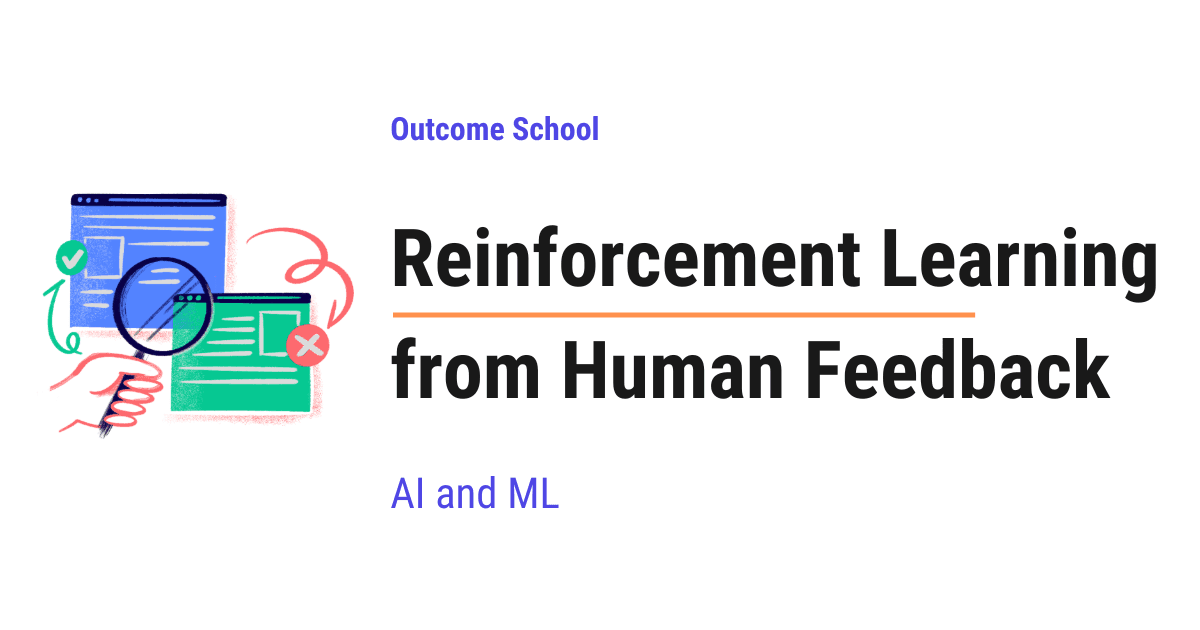
What is RLHF? Reinforcement Learning from Human Feedback Explained
RLHF (Reinforcement Learning from Human Feedback) teaches an LLM to give the responses that humans prefer, by turning human preferences into a reward signal.
What are Autoregressive Models?
An Autoregressive Model generates one piece at a time, like one token, by predicting the next step from everything it has generated so far. GPT works this way.
What are Large Reasoning Models (LRMs) and How Are They Different from LLMs?
A Large Reasoning Model (LRM) is an LLM that thinks step by step before it answers, producing a long chain of reasoning first. This makes it better at hard problems.
What is Continuous Batching in LLMs and How Does It Work?
Continuous Batching lets LLM servers handle many more users by replacing each finished request with a new one right away, so that the GPU is never idle.
What are Small Language Models (SLMs) and When Should We Use Them?
Small Language Models (SLMs) are language models with typically less than 10 billion parameters. They are cheaper and faster, and can run on our own devices.
What is Multimodal AI? How It Works and Where It Is Used
Multimodal AI is AI that can understand and generate more than one type of data, like text, images, audio, and video, at the same time.
What is LLM Routing? How to Send Each Query to the Right LLM
LLM Routing is the practice of choosing the right LLM for each user query, based on cost, latency, and quality, instead of sending every query to the same LLM.
What is Context Engineering?
Context Engineering is the practice of deciding what information goes into an LLM's context window, and how, so that the model can do its task reliably.
What is a Reflection Agent? How It Generates, Critiques, and Revises
A Reflection Agent is an AI Agent that writes a draft, critiques its own draft, and then writes a better version using that critique, again and again.
What is GraphRAG? How Knowledge Graphs Improve RAG
GraphRAG is RAG that uses a knowledge graph along with vector search to find better, more connected information before the LLM answers a question.
What is a Plan-and-Execute Agent and How Does It Work?
A Plan-and-Execute Agent is an AI Agent that first writes the full plan up front and then runs the plan step by step. Let's see how it differs from ReAct.
What is Agentic RAG? How It Works and When to Use It
Agentic RAG is a RAG system where an AI Agent decides when to search, what to search, and when to stop, instead of doing one fixed search before answering.
What is a ReAct Agent? How It Thinks and Acts, Explained
A ReAct Agent is an AI Agent built using the ReAct (Reasoning + Acting) pattern. It runs in a loop where the LLM thinks, takes an action, and observes the result.
What are Multi-Agent Systems and When Should We Use Them?
A Multi-Agent System is a setup where two or more LLM-driven agents, each with its own prompt and tools, work together on a shared task. Let's see when to use one.
How Does AI Agent Memory Work? The Memory Stack Explained
AI Agent Memory is the system that lets an LLM remember things across messages, sessions, and users. We will learn the memory stack and how it works.
What is an AI Agent? How It Works
An AI Agent is a system where an LLM takes a goal, decides the steps, uses tools, and keeps working in a loop until the goal is done. We will learn how it works.
What is RMSNorm? Root Mean Square Layer Normalization Explained
RMSNorm is a simpler and faster version of LayerNorm that keeps only the re-scaling step. It powers most modern LLMs like Llama, Mistral, and DeepSeek.
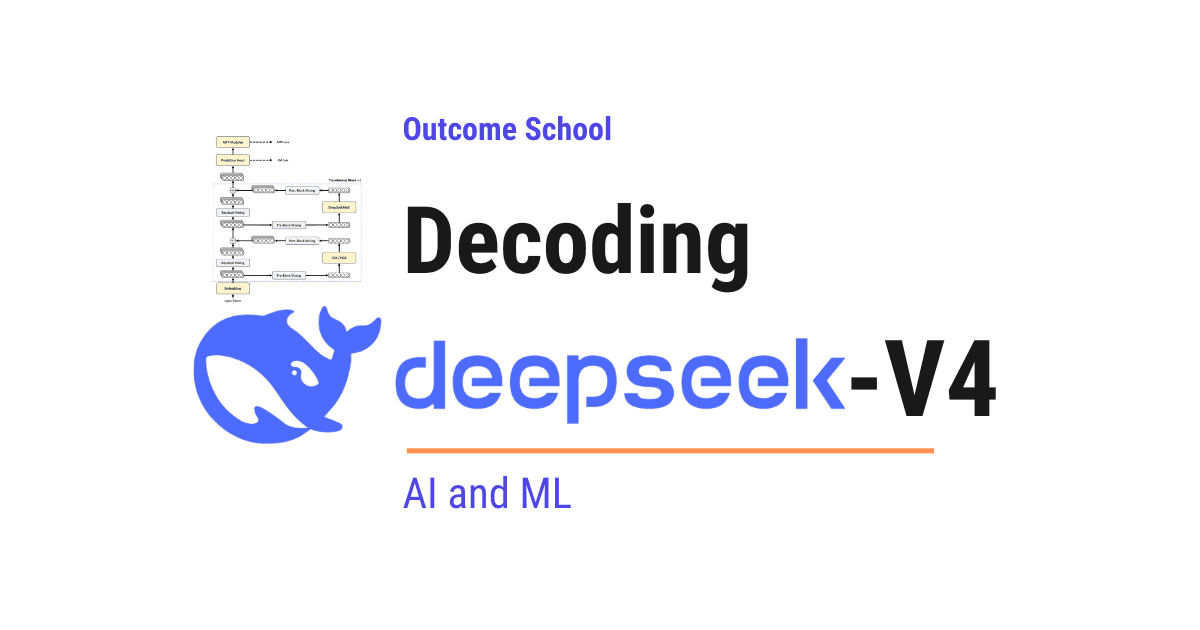
What is DeepSeek-V4 and How Does It Work? Architecture Explained
DeepSeek-V4 is a family of open Mixture-of-Experts models that supports a one-million-token context at about a tenth of the cost of DeepSeek-V3.2.
What is LoRA (Low-Rank Adaptation) and How Does It Fine-Tune LLMs?
LoRA (Low-Rank Adaptation) fine-tunes a large model without updating all its weights. It keeps the model frozen and learns a tiny pair of extra matrices.
What is RoPE (Rotary Position Embedding)? The Math Behind It
RoPE (Rotary Position Embedding) gives position information to a Transformer by rotating the Q and K vectors by an angle that depends on the token's position.
What is Grouped Query Attention (GQA) and Why Do LLMs Use It?
Grouped-Query Attention (GQA) divides the attention heads into groups, where all the heads in a group share the same Key and Value, but each has its own Query.
What is Cross-Entropy Loss?
Cross-Entropy Loss is a number that tells us how wrong our predicted probabilities are, compared to the true answer. We will learn its math with an example.
How Does Gradient Descent Work?
Gradient Descent is an optimization algorithm that reduces a model's loss by moving its weights step by step in the direction of the steepest downward slope.
What is a Vision Transformer (ViT) and How Does It Work?
A Vision Transformer (ViT) splits an image into small patches, treats each patch like a word, and processes them with a transformer to classify the image.
What is the Feed-Forward Network in LLMs and What Does It Do?
The Feed-Forward Network is the part of every Transformer layer where each token is processed on its own, after attention. It holds most of the model's parameters.
What is Flash Attention and Why Is It So Fast?
Flash Attention computes the same attention that Transformers use, but in a much faster and more memory-efficient way on the GPU. The math and result stay the same.
What is Mixture of Experts (MoE) and How Does It Work?
Mixture of Experts (MoE) uses many small expert networks and a router that picks only a few of them for each input. This makes large models faster and cheaper.
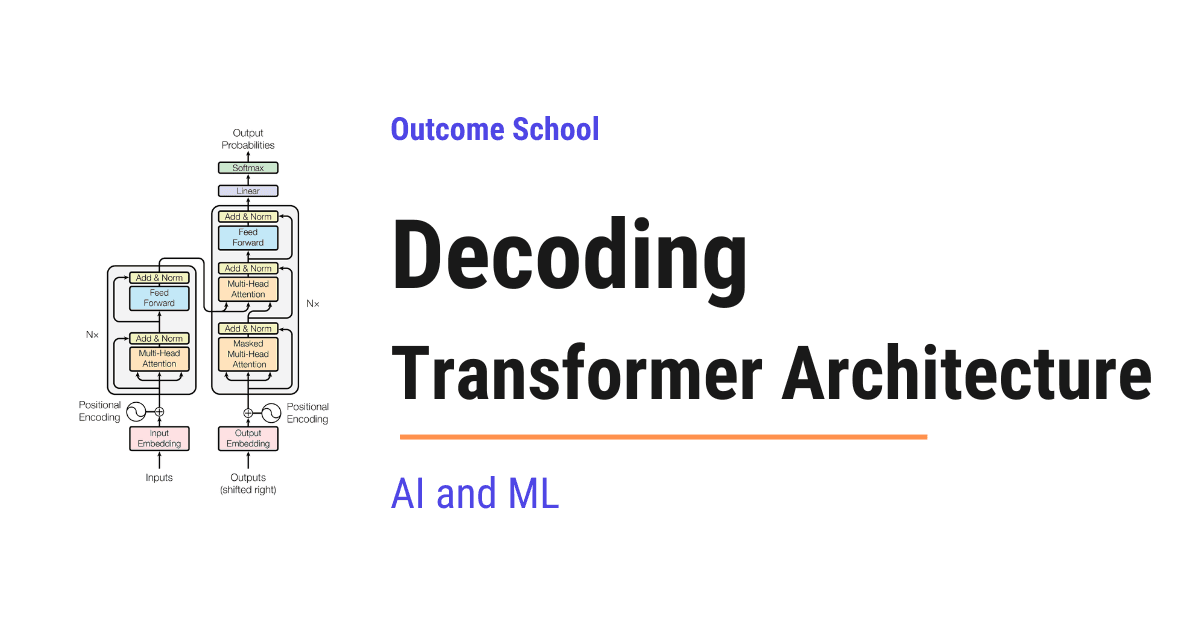
How Does the Transformer Architecture Work?
A Transformer is a tokens-in, tokens-out machine that uses attention to understand how every word relates to every other word. It powers every modern LLM.
How Does Backpropagation Work? The Math Explained Step by Step
Backpropagation calculates how much each weight in a neural network contributed to the error, by sending the error backward, so that we can adjust the weights.
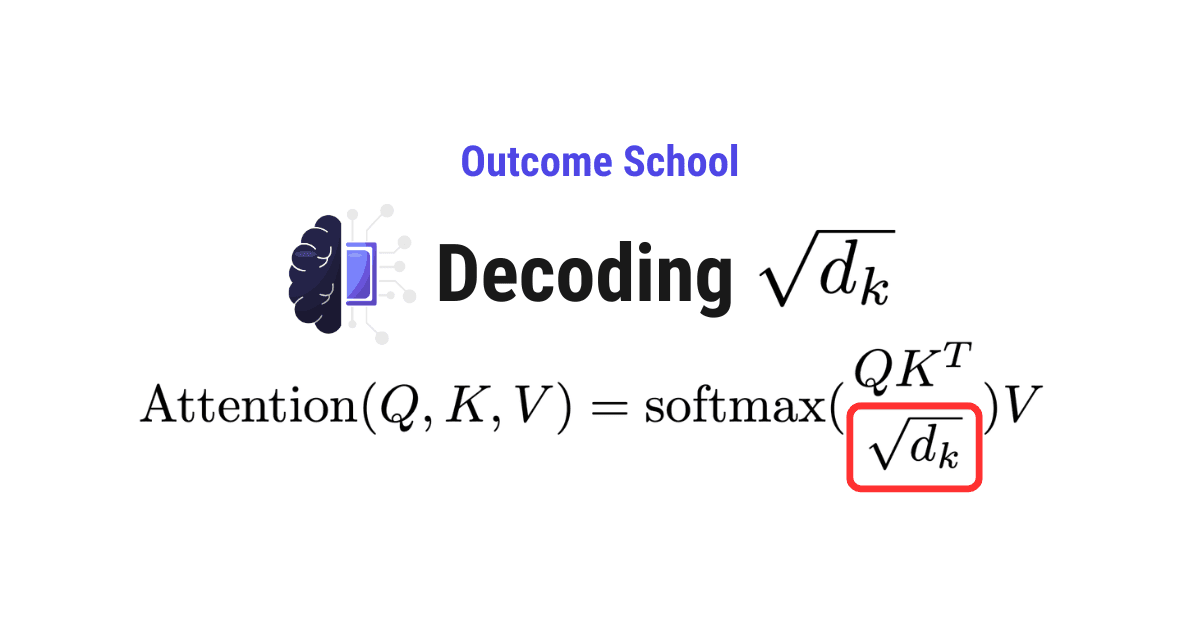
Why Do We Scale Attention by √dₖ? The Math Behind the Scaling Factor
We scale attention by √dₖ because dot products grow bigger as dₖ grows, which pushes softmax to extreme values. Dividing by √dₖ keeps them in a healthy range.
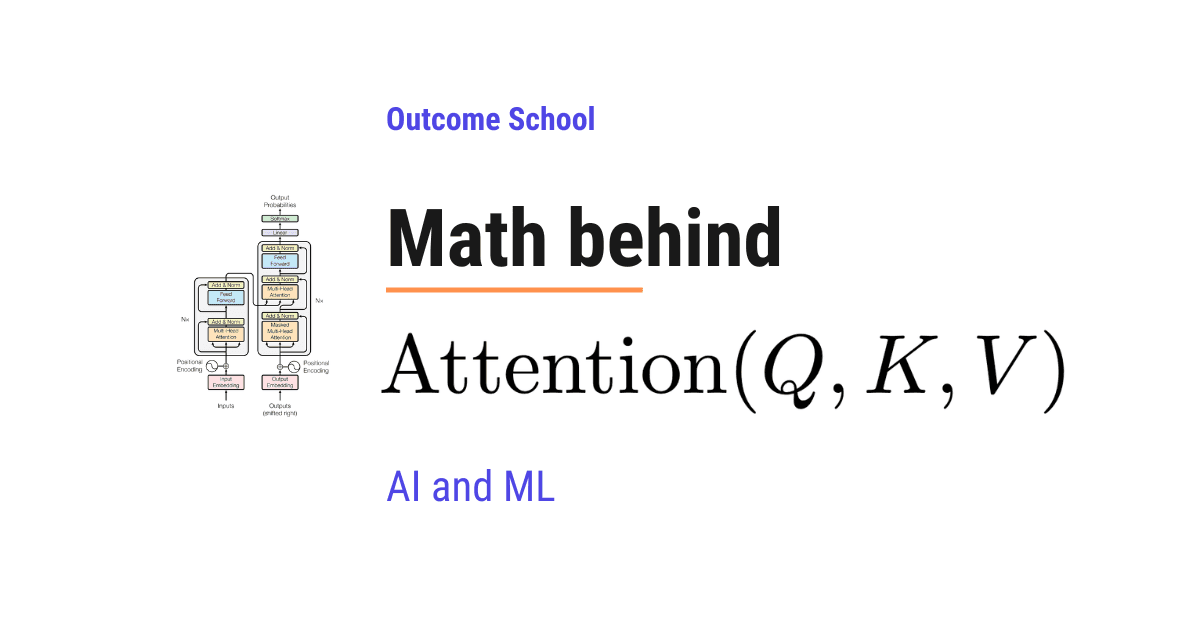
How Does Attention Work? The Math Behind Q, K, and V Step by Step
Attention is computed as softmax(Q x K^T / sqrt(d_k)) x V. We will learn the math behind Query, Key, and Value with a step-by-step numeric example.
What is Harness Engineering?
Harness Engineering is building the layer of code around an AI model that manages its inputs, outputs, tools, memory, errors, and evaluation for production.
What is Byte Pair Encoding (BPE) in LLMs?
BPE (Byte Pair Encoding) is the tokenization algorithm used by most LLMs. It keeps merging the most frequent pair of characters to build common subwords.
What is Paged Attention in LLMs and How Does It Work?
Paged Attention breaks the KV Cache memory into small fixed-size blocks called pages, which removes memory waste and lets LLMs serve many more users at once.
KV Cache in LLMs
KV Cache is a memory where an LLM saves the Key and Value of the tokens it has already processed, so that it does not compute them again for every new token.
What is Causal Masking in Attention and Why Do LLMs Need It?
Causal Masking in Attention blocks future tokens so that each token can look only at itself and the tokens before it. LLMs need it to predict the next token.
Linear Regression vs Logistic Regression
Linear Regression predicts a continuous value, like a price, whereas Logistic Regression predicts a category, like yes or no. Let's learn when to use which one.
Supervised vs Unsupervised Learning
Supervised Learning learns from labeled data, like learning with a teacher, whereas Unsupervised Learning finds patterns in unlabeled data, without a teacher.
Android TensorFlow Lite Machine Learning Example
TensorFlow Lite is the lightweight version of TensorFlow for mobile devices. We will use it in an Android app to detect objects on the device itself.
What is Bias In Artificial Neural Network?
Bias in an Artificial Neural Network is the constant c in y = mx + c. It lets the model shift its line away from the origin so that it can fit the data better.
What is Feature Engineering in Machine Learning?
Feature Engineering is the process of using domain knowledge of the data to create features that make Machine Learning algorithms work better.
How Does The Machine Learning Library TensorFlow Work?
TensorFlow works by letting us build a data flow graph of constants, variables, and operations, and then executing that graph on CPUs or GPUs.
What Are L1 and L2 Loss Functions?
L1 Loss (Least Absolute Deviations) and L2 Loss (Least Square Errors) are loss functions in machine learning. L1 handles outliers better than L2.
What is Machine Learning?
Machine Learning is a field of computer science that gives computers the ability to learn from data without being explicitly programmed.
What is a Recurrent Neural Network (RNN)?
A Recurrent Neural Network (RNN) is a neural network that remembers context from the earlier inputs in a sequence, which helps it predict the right output.
What is Regularization in Machine Learning? L1 vs L2 Explained
Regularization reduces overfitting by adding a penalty to the error. L1 (Lasso) adds the sum of absolute weights, and L2 (Ridge) adds the sum of squared weights.
What is Reinforcement Learning?
Reinforcement Learning is a type of machine learning where an agent learns to make decisions by interacting with an environment and getting rewards or penalties.