All Blogs

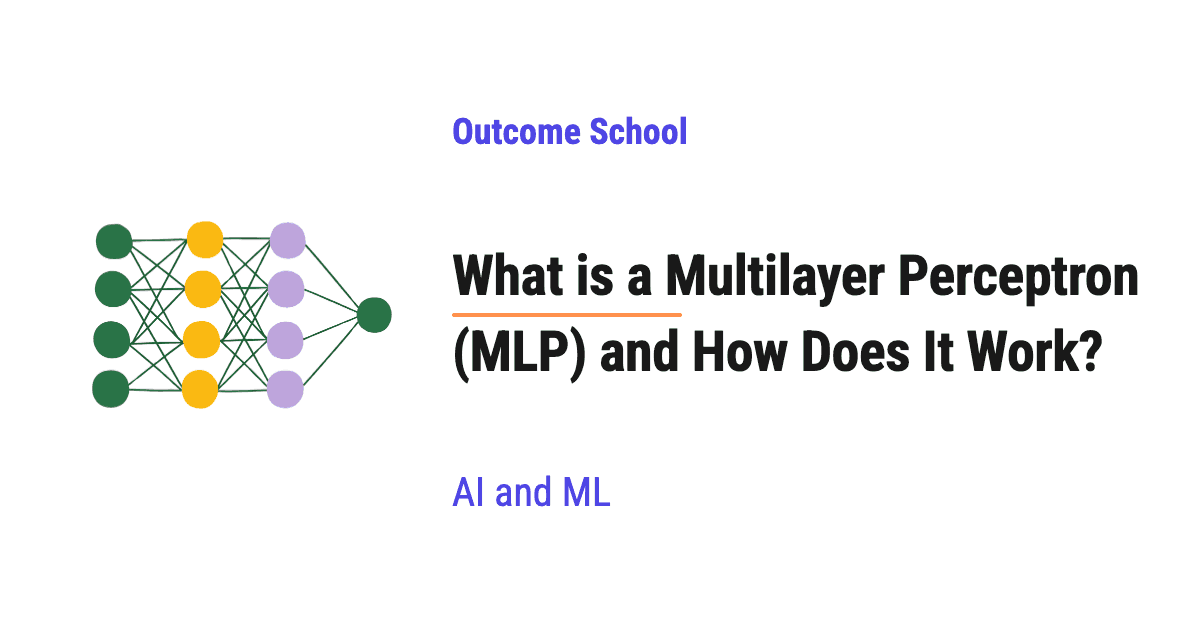
What is a Multilayer Perceptron (MLP) and How Does It Work?
A Multilayer Perceptron (MLP) is a neural network made of layers of simple units called perceptrons, where every unit in one layer is connected to every unit in the next layer. It works by passing numbers forward through these layers, where each unit multiplies, adds, and applies a simple rule, until the last layer gives the answer.

How does a voice agent hide the delay of a slow tool call?
A voice agent hides the delay of a slow tool call by never letting the line go silent. It speaks a short line while the tool runs, gives progress updates during a long wait, keeps the conversation going while the tool works in the background, and starts the tool early so that there is less delay to hide.

How do filler phrases hide latency in a voice agent?
Filler phrases hide latency in a voice agent by filling the silence with a short, natural line like "Let me check that for you" while the agent is still working on the real answer, so the user hears a reply right away instead of waiting in silence.

How does speculative LLM generation start replying before the user finishes?
Speculative LLM generation is a technique where a voice agent starts preparing its reply while the user is still finishing their sentence, keeps that reply hidden, and plays it only if the user's final words match what the reply was based on.

How does sentence chunking feed LLM output into TTS faster?
Sentence chunking feeds LLM output into TTS faster by cutting the reply into sentences while the LLM is still writing it, and sending each finished sentence to the TTS right away, so the voice starts speaking after the first sentence instead of after the full reply.
How does a TTS model start speaking before the full sentence arrives?
A TTS model starts speaking before the full sentence arrives by reading the text in small pieces as it comes in, staying only a few words behind the text, and turning each piece into sound while the rest of the sentence is still being written.

How Does Matrix Multiplication Work in Neural Networks?
Matrix multiplication in neural networks is the operation that takes the input numbers, multiplies them with the weights of all the neurons in a layer, and adds up the results, all in one step. Most of the work a neural network does is this one operation, repeated layer after layer.
Why does the time-to-first-audio matter more than total response time?
Time-to-first-audio matters more than total response time because a person on a voice call feels only the silence before the agent starts speaking. Once the agent starts speaking, the person is busy listening, and the rest of the reply can keep being prepared in the background.

How does the voice-to-voice latency of a voice agent get measured?
Voice-to-voice latency of a voice agent gets measured as the time from the moment the user stops speaking to the moment the user hears the first sound of the agent's reply. We measure it by recording both voices on one timeline, finding the end of the user's speech and the start of the agent's speech, and subtracting the two.