All Blogs

How do Query Rewriting and Multi-Query Retrieval work?
Query Rewriting and Multi-Query Retrieval are two ways of improving the search step of an AI system. Query Rewriting uses an LLM to turn the user's messy question into one clear search query, and Multi-Query Retrieval uses an LLM to turn the question into several different search queries, searches with all of them, and merges the results.
How does Tree of Thoughts work?
Tree of Thoughts is a way of making an LLM solve a hard problem by trying many possible next steps, checking which ones look good, and going deeper only on the good ones, just like exploring the branches of a tree.
How does Contextual Retrieval work?
Contextual Retrieval is a way to improve RAG by adding a short note to every chunk of a document before we store it. The note explains where the chunk comes from, so the system can find the right chunk even when the chunk alone does not say enough.
How does Ollama work?
Ollama is a free tool that lets us download and run LLMs on our own computer with one simple command. It works by running a small server in the background that downloads compressed model files, loads them into memory, and uses a fast engine to generate text when we send it a prompt.

Stop Tokens in LLMs
A Stop Token is a special token in the vocabulary of an LLM that means the text ends here. When the model produces it, the generation loop stops writing.
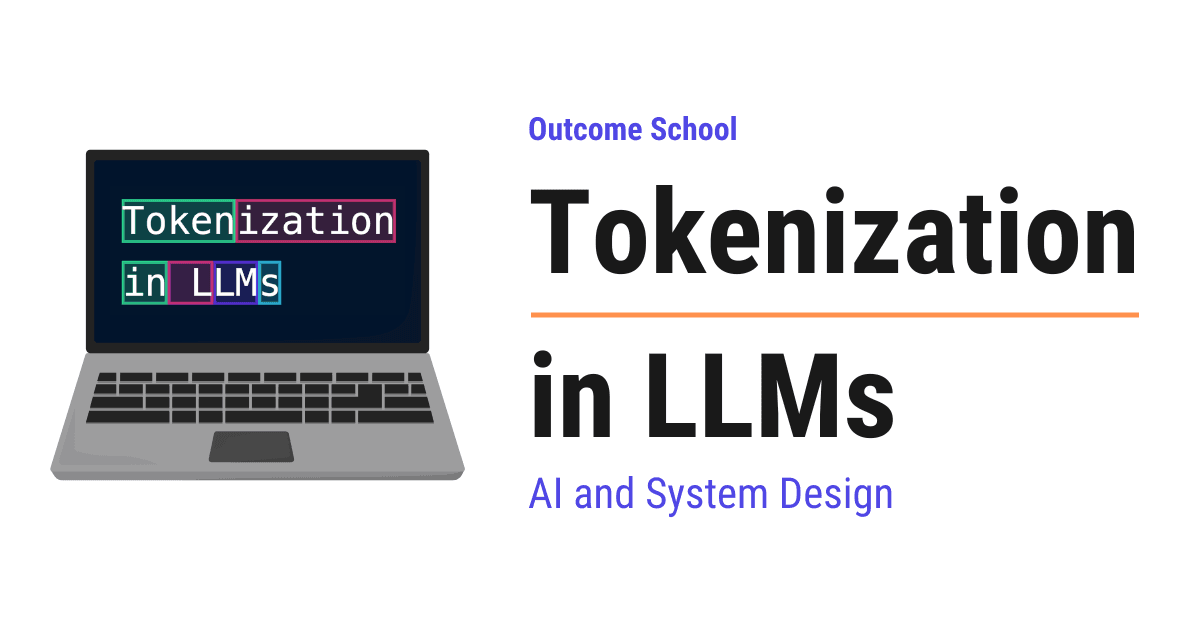
Tokenization in LLMs
Tokenization in LLMs is the process of breaking text into small pieces called tokens and then converting each token into a number that the model can work with.
How do CUDA Kernels work?
A CUDA Kernel is a function that runs on the GPU and is executed by many threads at the same time, where each thread finds and does its own small part of the work.
The Future of Software Development
The Future of Software Development is a world where AI models become so smart, so fast, and so cheap that we simply tell the computer what we want, and AI agents build, test, and ship it for us. The work of software engineers moves from writing every line of code to building, checking, and improving the systems around these AI models.
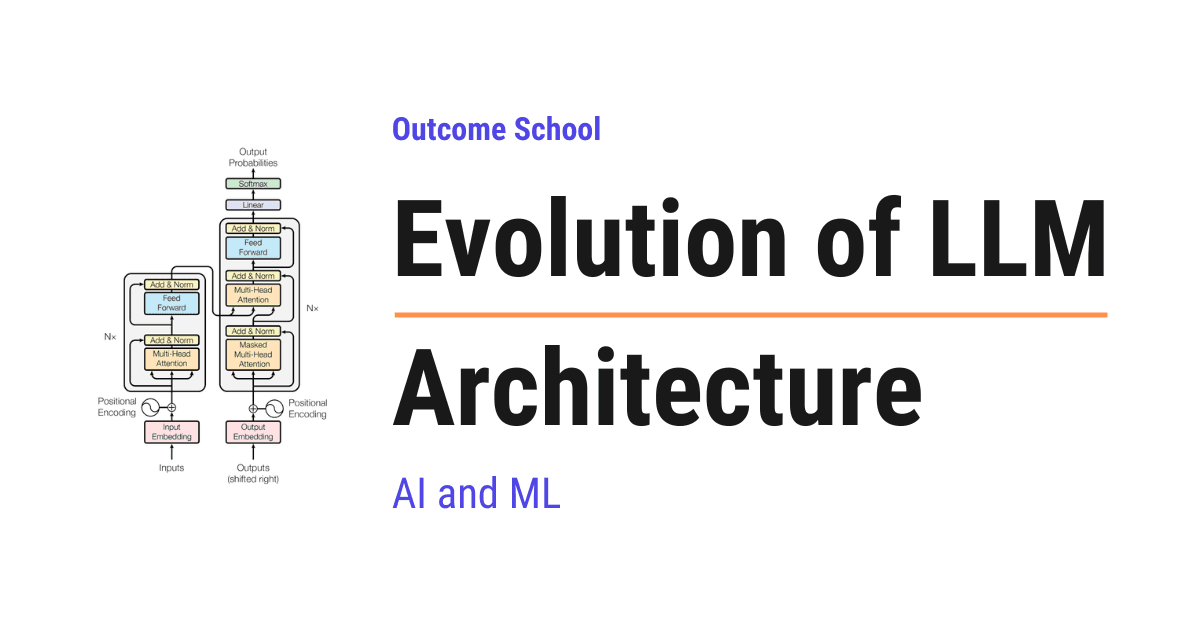
Evolution of LLM Architecture
LLM architecture evolved from RNNs that read one word at a time, to Attention, to the Transformer, to scaling, and to Mixture of Experts (MoE) that we use today.