All Blogs


AI Is Only as Good as Our Definition of Done
AI does its best work when we can clearly check if a task is done, and it struggles when only a human can judge it. That check is our definition of done.
How does Prefix Tuning work?
Prefix Tuning keeps a large language model frozen and trains only a small set of extra numbers, called the prefix, to adapt the model to a new task cheaply.
What is Graph Engineering?
Graph Engineering is designing an AI system as a graph, where every step is a node and every path between steps is an edge, instead of one giant prompt.
What is Loop Engineering?
Loop Engineering is designing the repeating cycle that an AI agent runs, so that it keeps making real progress on a task and stops at the right moment.

What is the Lost in the Middle Problem in LLMs and How to Fix It?
The Lost in the Middle problem is when an LLM uses the beginning and the end of a long input well, but pays very less attention to what is in the middle.

How Does LLM Watermarking Work?
LLM watermarking hides a signal inside the text a model writes. A secret key slightly nudges the word choices, and a detector with the same key finds it later.
What is Deep RL from Human Preferences? The Paper That Started RLHF
Deep RL from Human Preferences is the 2017 paper that taught machines what we want by asking humans to pick the better of two clips. It is the origin of RLHF.

What is InstructGPT? How GPT-3 Learned to Follow Instructions
InstructGPT is the model that taught GPT-3 to follow our instructions by learning from human feedback (RLHF). This work led directly to ChatGPT.
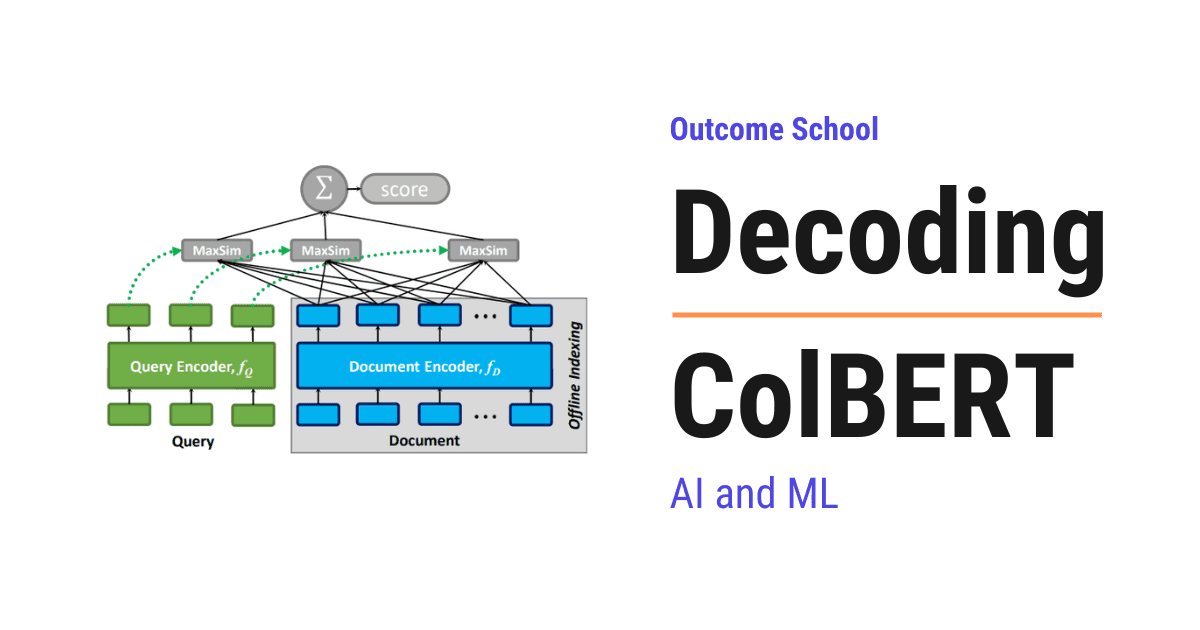
What is ColBERT? Late Interaction Retrieval Explained
ColBERT is a retrieval method that keeps the word-by-word matching of a slow BERT reranker but makes it fast enough to search millions of passages.